Mr. Shivam Gupta, Director, Walso Solar Solution Pvt. Ltd.
“Our goal is not simply to become a larger supplier. We want Walso Solar to be recognised as a trusted Indian manufacturing and solutions partner for the solar industry, capable of supporting a customer from engineering and product development through to manufacturing and supply.” Q1. Walso Solar has been working in the solar industry. What has […]
“Our goal is not simply to become a larger supplier. We want Walso Solar to be recognised as a trusted Indian manufacturing and solutions partner for the solar industry, capable of supporting a customer from engineering and product development through to manufacturing and supply.”
Q1. Walso Solar has been working in the solar industry. What has been the company’s journey so far, and what are your key areas of focus today?
Walso Solar Solution Pvt. Ltd. was incorporated in 2024, so this is a two-year journey — but it has been an unusually dense two years.
We began from a small 1.5-acre premises. In August 2025 we shifted to a 4-acre plant, and within a year we had doubled that facility and expanded the site to 8 acres, with the next phase of expansion already being planned. Over the same period our team has grown from 30 people to more than 300, working across shifts.
What has driven that growth is a single principle — backward integration on every product we make. Last year we commissioned our own hot-dip galvanising plant with a 7.0-metre kettle. Within a year of running it we had completely filled that capacity, and we have now ordered a second galvanising plant with an 8.0-metre kettle — a fully enclosed facility using among the most advanced hot-dip galvanising technology available in India today.
Our first two years were built largely on solar pump structures and BOS under PM-KUSUM, manufactured to MNRE-approved specifications. In that period we have delivered over one lakh pump structures and BOS sets, with minimal complaints from the field.
That has shaped what we focus on today: quality, customer satisfaction and meeting deadlines. In an industry growing at this pace, holding all three together at once is the real challenge.
Q2. Which solar products and solutions are currently the main focus for Walso Solar, and what makes them different in the market?
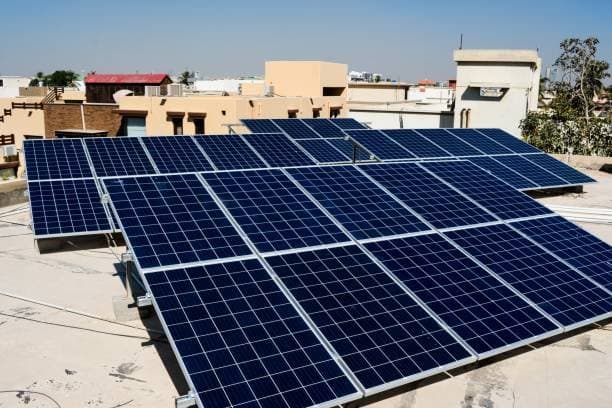
Our portfolio centres on solar mounting structures and BOS products — solar water-pumping structures, rooftop mounting systems, ground-mount structures, and BOS items including AC/DC distribution boxes, cabling, connectors, earthing solutions and project-specific components.
Solar pump structures remain our strongest segment, including manual dual-axis tracking structures engineered to MNRE specifications across different pump capacities. Alongside these we now manufacture rooftop structures and BOS kits for the PM Surya Ghar segment, and ground-mounting structures for utility-scale projects.
What separates us is backward integration. Fabrication and hot-dip galvanising sit under one roof, along with CNC plasma cutting, roll forming, press machines and welding. Dimensional accuracy, galvanising quality and production scheduling are difficult to hold consistent when these processes are split across vendors — keeping them in-house is what allows us to repeat the same quality batch after batch, across lakhs of units.
We have taken the same approach to BOS, which in this industry is largely a trading business. Rather than buy and resell, we have started manufacturing: in January this year we commissioned two in-house HDPE extrusion lines to meet our own demand and control quality at source, and we intend to bring several more BOS products in-house on the same logic. A structure manufacturer who controls its own BOS quality is a very different proposition for a customer than one assembling bought-out components.
The third difference is engineering. Site conditions, loading requirements and installation practices vary from project to project, so instead of treating structures as a standard commodity, we work from the customer’s application and site data and engineer accordingly.
Q3. India’s renewable energy market is growing fast. What major changes are you seeing in customer demand and project requirements?
The Indian solar market has moved from being price-led to being quality-, performance- and delivery-led.
Customers now evaluate a project across its full lifecycle. Structural strength, corrosion protection, installation time, material traceability and dimensional accuracy sit alongside price in the decision, not below it. Galvanising quality in particular has come under much closer scrutiny, because it determines how the structure behaves ten and fifteen years into its life.
The second shift is towards customisation. Wind zones, soil conditions and installation practices differ from state to state and site to site, and customers increasingly expect a manufacturer to engineer for those conditions rather than supply standard fabricated components.
The third — and in my view the most demanding — is delivery capability at volume. Solar projects run against tight commissioning schedules, and the ability to hold consistent quality while delivering in large quantities on time has become a genuine competitive advantage. It is also the hardest thing to do. Much of our own expansion over the last two years, from the plant doubling to filling a galvanising kettle’s capacity within a year of commissioning it, has been a response to exactly this pressure.
Q4. How do you see government initiatives and policies such as PM Surya Ghar, PM-KUSUM and the focus on domestic solar manufacturing supporting the industry’s growth?
These programmes are creating the long-term demand visibility that allows manufacturers to invest, and we are direct evidence of that.
PM-KUSUM has been the foundation of our first two years. Manufacturing to MNRE-approved specifications, we have supplied more than one lakh pump structures and BOS sets into the programme — a scale that would not have existed without a policy pushing solar into agriculture.
PM Surya Ghar is now doing the same for rooftop. We entered the segment only four months ago and have already delivered over 40,000 BOS kits and 30,000 rooftop structures. The pace of that ramp-up says a great deal about how quickly residential rooftop adoption is moving.
The focus on domestic manufacturing matters just as much, and it needs to reach beyond modules. Structures, BOS components and electrical equipment are still substantially trading-driven. Our decision to install our own galvanising plants and HDPE extrusion lines is a direct response — every process brought in-house reduces supply-chain dependency, shortens delivery timelines and makes after-sales accountability far clearer.
Policy is an important catalyst. But the industry will ultimately sustain its growth through quality, competitive manufacturing and customer confidence.
Q5. Which states or regions in India are currently your priority markets, and where do you see the biggest business opportunities in the coming years?
We are genuinely pan-India rather than dependent on any single market. In two years, we have supplied into Maharashtra, Karnataka, Uttar Pradesh, Haryana, Rajasthan, Himachal Pradesh, Ladakh, Madhya Pradesh, Bihar, Andhra Pradesh, Assam, Tripura and Jammu & Kashmir. Maharashtra accounts for our largest share by some margin.
That spread matters for more than reach. Supplying from Ladakh and Himachal to coastal Andhra and the North-East means designing and galvanising for very different wind, altitude, temperature and corrosion conditions — and that experience feeds directly back into our engineering.
Solar water pumping under PM-KUSUM remains a core opportunity, given the size of India’s agricultural base and the policy push to reduce dependence on conventional agricultural power. Rooftop under PM Surya Ghar is growing rapidly and, on the evidence of our first four months in the segment, has significant headroom.
The third area we have moved into is utility-scale, where ground-mounting structures are required in bulk. This segment rewards exactly the capabilities we have been building — volume capacity, in-house galvanising and delivery discipline — and we expect it to become a substantial part of our business.
We are also strengthening our position in the domestic market more broadly, working through EPC partners, pump manufacturers, solar developers, distributors and institutional customers.
Q6. Marketing and customer awareness are becoming very important in the solar industry. What is Walso Solar’s strategy to strengthen its brand and reach more customers and partners across India?
In a B2B industry like ours, a brand is built on product performance, consistency, service and relationships — not on communication alone. A company that has been in the market for two years cannot rely on legacy; it has to earn its reputation order by order. Much of our growth so far has come through customers who worked with us once and came back, and through their references.
So our first rule is that whatever we claim in the market must be backed by actual manufacturing capability and field performance. Beyond that, we are strengthening our digital presence, participating in industry exhibitions, and engaging directly with EPC companies, developers, pump manufacturers and channel partners.
We also want to communicate more of the engineering behind our products. A customer should understand not just what they are buying but why a particular structural design, galvanising specification or BOS configuration suits their project — that builds far more confidence than a product catalogue.
The objective throughout is partnership rather than transaction: to make Walso a dependable manufacturing partner for solar companies across India.
Q7. What are Walso Solar’s plans for the next 2–3 years? Are there any new products, technologies, markets or partnerships that you are planning to focus on?
The next two to three years are about scaling without diluting what got us here.
On capacity, the second hot-dip galvanising plant with an 8.0-metre kettle is our immediate priority — a fully enclosed facility built on the latest galvanising technology. Having expanded the site to 8 acres, we are already planning the phase beyond that, because at our current rate of growth capacity has to be created ahead of demand rather than in response to it.
On product, we will keep extending backward integration into BOS. The two HDPE extrusion lines commissioned in January are the beginning; several more BOS products are planned to move in-house, so that we manufacture what the industry largely trades. Alongside this we are developing more application-specific solutions across pumping, rooftop and ground-mounted projects, with standardisation and engineering optimisation as the base — a well-standardised design is faster to produce, easier to install and more repeatable in quality.
On markets, our focus is on scaling the PM Surya Ghar and utility-scale segments we have recently entered, while continuing to grow our PM-KUSUM business and widening our partner network across India.
On process, we are investing in automation, process control and ERP-driven planning. As volumes grow, traceability and planning discipline matter as much as machine capacity, and we want that foundation in place before we need it.
Our goal is not simply to become a larger supplier. We want Walso Solar to be recognised as a trusted Indian manufacturing and solutions partner for the solar industry, capable of supporting a customer from engineering and product development through to manufacturing and supply.
India’s renewable-energy journey is still in its early stages. Having built this much in two years, we intend to be a meaningful part of what comes next — and to help make the domestic solar ecosystem stronger and more self-reliant.