PM KUSUM 2.0: The ₹50,000 Crore Blueprint Transforming India’s Agricultural Energy Landscape in 2026
India’s agricultural sector consumes a massive portion of the nation’s energy, largely driven by inefficient, grid-dependent pumps or heavily polluting diesel generators. To combat this and boost farmer incomes, the Ministry of New & Renewable Energy (MNRE) launched the Pradhan Mantri Kisan Urja Suraksha evam Utthaan Mahabhiyan (PM-KUSUM). Initially hampered by pandemic-era delays, the scheme […]
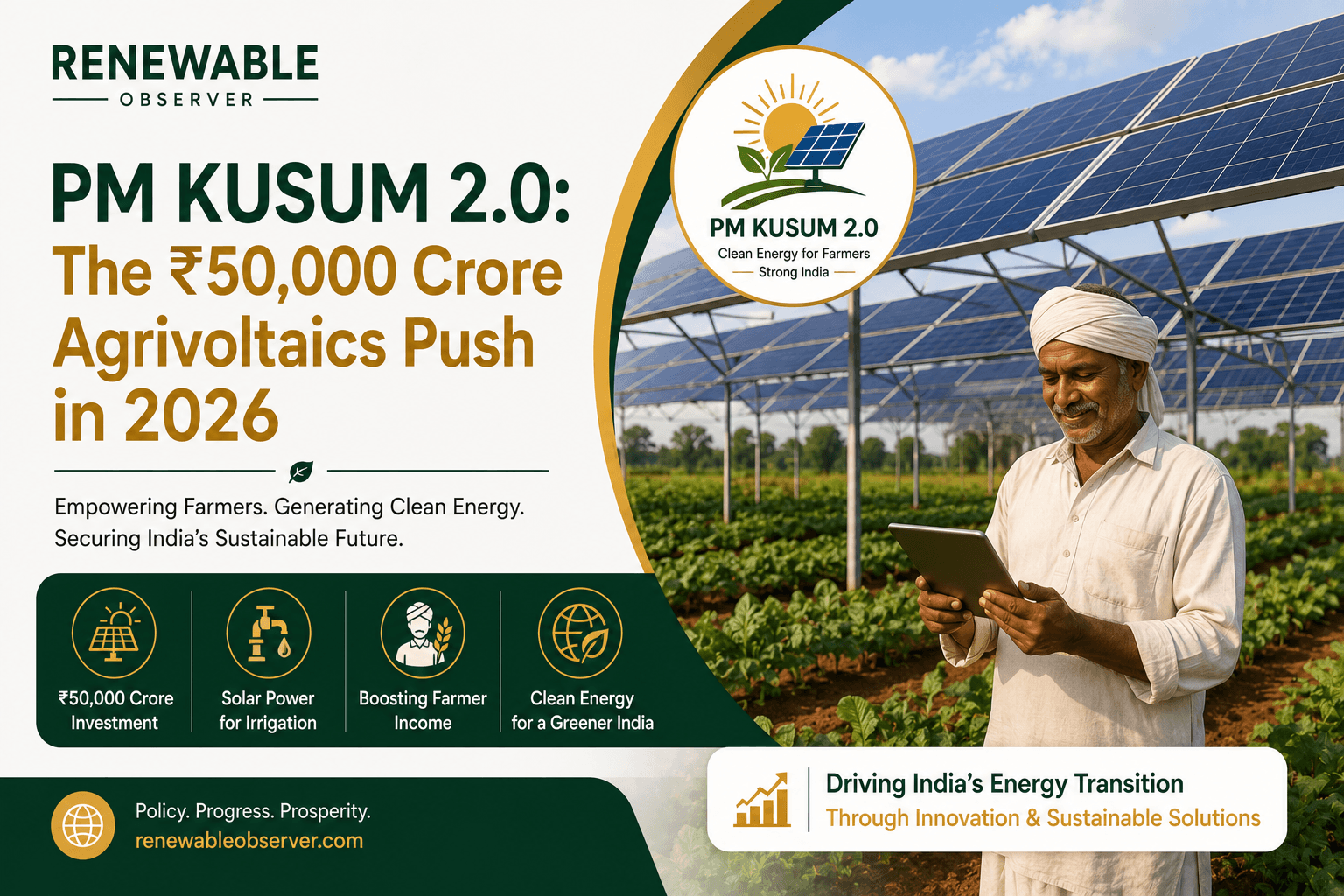
India’s agricultural sector consumes a massive portion of the nation’s energy, largely driven by inefficient, grid-dependent pumps or heavily polluting diesel generators. To combat this and boost farmer incomes, the Ministry of New & Renewable Energy (MNRE) launched the Pradhan Mantri Kisan Urja Suraksha evam Utthaan Mahabhiyan (PM-KUSUM).
Initially hampered by pandemic-era delays, the scheme has been given a massive new lease on life. The Indian Government has officially extended the deadline for Phase 1 to March 31, 2027 (for projects signed by late 2025) and is preparing to roll out PM KUSUM 2.0 with a massive ₹50,000 crore total expected outlay.
Here is the complete, updated guide for EPC developers, farmers, and energy professionals looking to navigate PM KUSUM in 2026.
1. What is the PM KUSUM Scheme in 2026?
At its core, the PM KUSUM scheme is designed to “de-dieselize” Indian agriculture. It provides heavy financial subsidies—typically around 60%—to help farmers install solar agriculture pumps or set up small-scale solar power plants.
The scheme operates through three distinct components:
- Component A (Solar Power Plants): Farmers, cooperatives, or panchayats can set up decentralized ground or stilt-mounted solar plants (up to 2 MW) on barren, fallow, or pasture lands. The power generated is sold directly to the local DISCOM at a pre-determined tariff, providing the landowner with a steady, 25-year income stream.
- Component B (Standalone Pumps): Designed for off-grid farms, this component subsidizes the installation of new standalone solar agricultural water pumps to replace expensive diesel units.
- Component C (Grid-Connected Pumps): For farmers who already have grid-connected electric pumps, this component subsidizes the solarization of that pump. The farmer uses the generated solar power for irrigation and can sell the surplus power back to the grid. Component C also allows states to solarize entire agricultural feeders (Feeder Level Solarisation) instead of individual pumps.
2. The Financials: Subsidies and Bank Loans
The financial structuring of PM KUSUM is designed to make solar adoption highly accessible for the average farmer.
For Components B and C, the typical funding structure is as follows:
- Central Subsidy (CFA): 30% of the benchmark cost.
- State Subsidy: At least 30%.
- Bank Loan: Up to 30%.
- Farmer Contribution: The farmer only needs to pay roughly 10% upfront.
Note: For North-Eastern States, Sikkim, Jammu & Kashmir, Himachal Pradesh, Uttarakhand, Lakshadweep, and A&N Islands, the Central Financial Assistance (CFA) is increased to 50%, keeping the farmer’s contribution at a maximum of 20%.
3. Critical 2026 Update: The ALMM List-II Mandate
If you are an EPC contractor or a farmer executing a PM KUSUM project this year, you must adhere to strict new domestic manufacturing rules.
As of June 1, 2026, any PM KUSUM project being commissioned must use solar modules manufactured from ALMM List-II certified domestic cells. This is a significant procurement constraint added on top of the existing requirement to use ALMM List-I modules. Sourcing cheap, non-compliant imported modules will result in the total forfeiture of your Central Financial Assistance.
4. PM KUSUM 2.0: What is Coming Next?
While Phase 1 is still active, the industry is eagerly awaiting the formal notification of PM KUSUM 2.0.
- The Agrivoltaics Push: A confirmed 10 GW component of the new scheme will be dedicated to Agrivoltaics. This allows for “dual land use,” where solar panels are mounted high above the ground on steel structures, allowing farmers to continue growing crops beneath them.
- Budget Increases: The Union Budget for FY2026-27 confirmed a 66% increase in the annual KUSUM budget allocation (reaching approximately ₹5,000 crore).
- Awaiting Guidelines: The formal MNRE notification—which will detail the new per-MW benchmark costs, state-wise targets, and exact subsidy structures for PM KUSUM 2.0—is expected in the second half of 2026.
5. How to Apply and Avoid Fraud
Because PM KUSUM is implemented jointly by the Central Government and individual State nodal agencies, applications do not run on a single national form. Each state opens its own application window.
To apply, you must navigate through the official central portal to find your specific state’s portal.
Official Government Links:
- Central Information Portal: Start your journey at the official MNRE PM-KUSUM Page.
- State Application Windows: You can find the links to individual state portals (like UP, Rajasthan, Haryana, etc.) via the PM KUSUM Central Landing Site.
⚠️ FRAUD ALERT: The MNRE has issued strong warnings regarding fake websites claiming to be the official PM KUSUM registration portals. Fraudulent sites using domains like
.org,.in, or.com(such askusumyojanaonline.in.netorpmkisankusumyojana.com) are attempting to collect fake registration fees.Never pay registration fees online to a non-government website. Always ensure you are on a
.gov.indomain and verify your state’s nodal agency before transferring any funds. If in doubt, call the official MNRE Toll-Free Number: 1800-180-3333.
Read Next
All News
Tsuyo and LvKON Join Hands to Accelerate India’s Next Generation of Electric Powertrain Technologies for Commercial Vehicles

All News
IB Solar Launches IBHI Series Hybrid Inverters at REI Expo 2026, Strengthening Its Clean Energy Portfolio
All News
Arkannect Launches Made-in-India Hybrid Inverters and Battery Storage, Targets ₹225 Crore Revenue in Year One