Can Bangladesh Achieve Its 20% Renewable Energy Target by 2030?
Dhaka, Bangladesh: Bangladesh has renewed its commitment to expanding clean energy by setting a target to generate 20% of its electricity from renewable sources by 2030, backed by fiscal reforms introduced in the FY27 national budget. While the new incentives mark a significant policy shift, experts caution that achieving the target will require major investments, […]
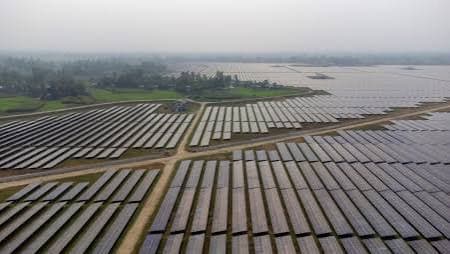
Dhaka, Bangladesh: Bangladesh has renewed its commitment to expanding clean energy by setting a target to generate 20% of its electricity from renewable sources by 2030, backed by fiscal reforms introduced in the FY27 national budget. While the new incentives mark a significant policy shift, experts caution that achieving the target will require major investments, regulatory certainty, and rapid infrastructure upgrades.
The FY27 budget removes several import duties, regulatory duties, and advance taxes on solar panels, inverters, battery storage systems, and other renewable energy components until 2031. These measures are intended to reduce the cost of clean energy technologies and encourage private sector investment after years of tax policies that favored fossil fuel infrastructure.
Renewable Capacity Remains Well Below Target
Bangladesh currently operates approximately 1,700 MW of renewable energy capacity compared to more than 30,000 MW of total installed power generation capacity. According to the Institute for Energy Economics and Financial Analysis (IEEFA), the country will need to add nearly 760 MW of renewable capacity every year through 2030 to have a realistic chance of meeting its target.
Energy analysts note that the government’s objective could be interpreted either as 20% of installed capacity or 20% of actual electricity consumption, with the latter representing a far more ambitious challenge.
Rooftop Solar and Utility Projects Offer Hope
Experts point to two major initiatives that could accelerate renewable deployment: the National Rooftop Solar Programme, targeting around 3,300 MW, and utility-scale renewable projects expected to contribute another 5,500 MW of installed capacity.
Together, these projects could add nearly 8,800 MW of renewable generation, although actual electricity production will be lower because of solar capacity factors.
Investment and Policy Stability Remain Critical
Industry experts emphasize that fiscal incentives alone will not be enough to attract the level of investment required.
They argue that investors need long-term policy certainty, timely payments, and confidence that renewable energy contracts will not face abrupt cancellations or regulatory reversals. Bangladesh also continues to face financing challenges due to its sovereign credit rating and the cancellation of several renewable energy projects in recent years.
The IEEFA estimates Bangladesh will require between $933 million and $980 million in renewable energy investment annually until 2030 to remain on track toward its clean energy goals.
Grid Infrastructure and Financing Pose Major Challenges
Beyond financing, Bangladesh’s electricity grid requires significant modernization to integrate higher levels of renewable generation.
Experts highlight the need for smart-grid technologies, battery energy storage systems, and improved transmission infrastructure. Meanwhile, access to affordable financing remains limited, making rooftop solar projects financially challenging for many businesses despite recent tax relief measures.
Bangladesh’s geographical constraints also limit the expansion of large utility-scale solar farms. As a result, rooftop solar, floating solar installations, and distributed renewable energy systems are increasingly viewed as the country’s most practical pathway for expanding clean energy capacity.
Outlook
The FY27 budget represents one of Bangladesh’s strongest policy moves toward renewable energy by removing long-standing fiscal barriers for clean energy technologies. However, experts agree that achieving the 20% renewable electricity target by 2030 will depend on consistent policy implementation, stronger investor confidence, affordable financing, modern grid infrastructure, and continued private sector participation. If these challenges are successfully addressed, Bangladesh could significantly accelerate its clean energy transition over the coming years.